

colloquia
14
Oct
2026
First Colloquium on AI for Scientific Discovery
Physical
Back
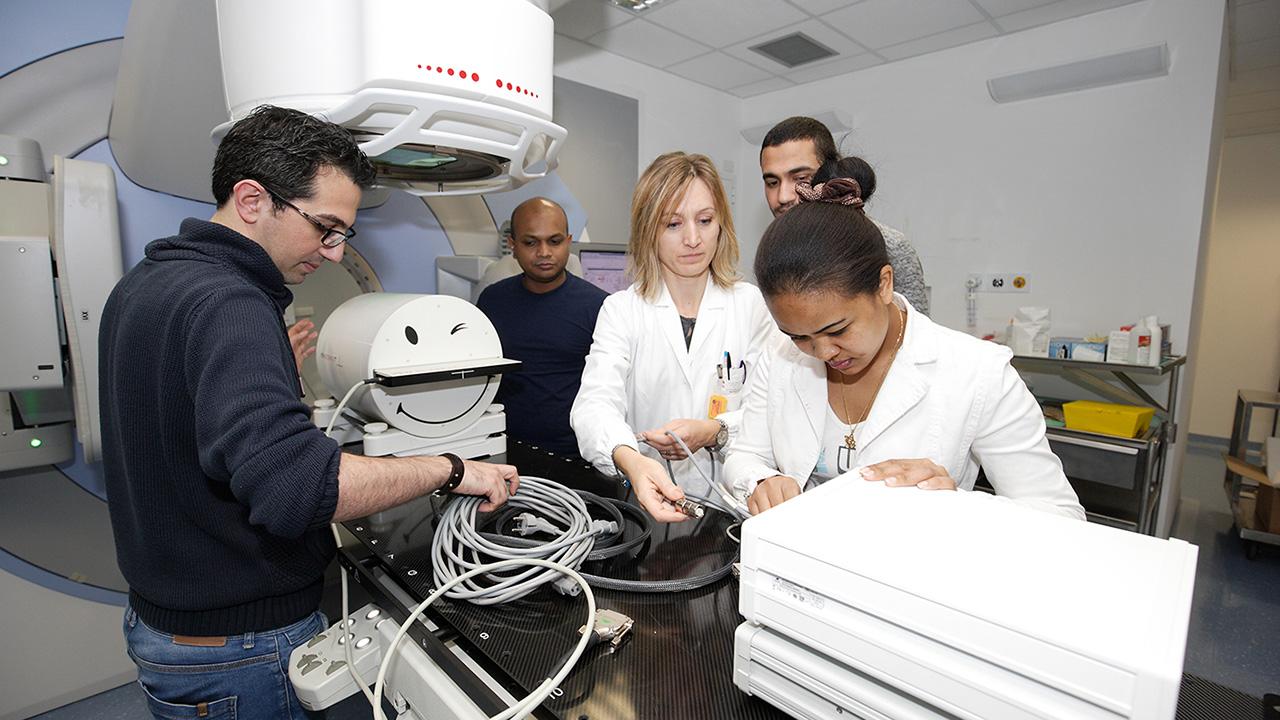
Accurate measurements are the basis of every effective diagnosis and safe treatment. To ensure that this fundamental requirement for patient safety is met the Abdus Salam International Centre for Theoretical Physics in Trieste and the University of Trieste have launched the world's first Master's degree in Radiation Metrology. This new two-year course, which began on 26 January, is part of the Master's Degree in Advanced Studies in Medical Physics and is co-funded by the International Atomic Energy Agency (IAEA).
Medical technologies that use radiation, including widely used techniques such as X-rays, CT scans and radiotherapy, save many lives every year. Using them to make accurate and safe diagnoses and treatments requires highly specialised professionals who can calibrate the instruments and assist medical staff in using the calibration results to ensure the safety and effectiveness of radiation diagnostics and treatment.
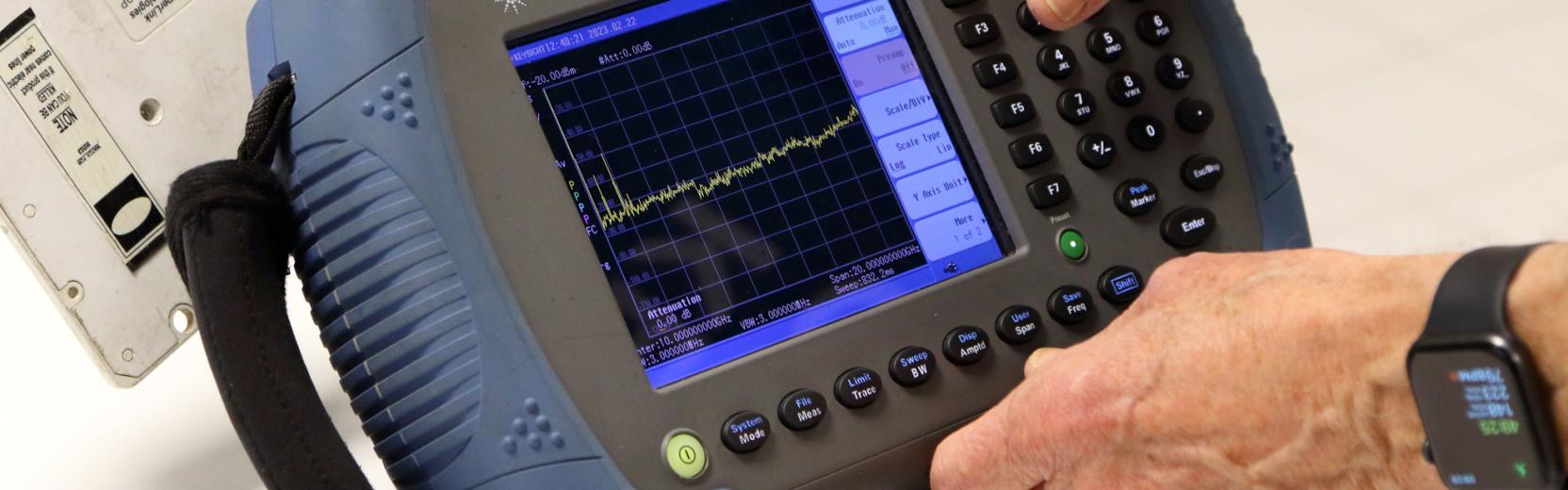
The new course in radiation metrology in Trieste will provide a small group of selected students, mainly from the Global South, with the managerial and technical skills they will need to become qualified radiation metrologists and play this vital role in their countries. Once graduated, the Qualified Radiation Metrologists will work in Secondary Standard Dosimetry Laboratories, centres coordinated by the IAEA and the World Health Organization (WHO) to disseminate radiation dosimetry quantities in accordance with international basic safety standards. They will operate the specific equipment needed for radiation measurements, perform calibrations, evaluate the results and issue calibration certificates.
Four students coming from Venezuela, Nigeria, Kenya and South Africa started their two-year training in January. During the first year they will attend the lectures of the Master of Advanced Studies in Medical Physics, with additional courses focussing on dose measurements and calibration. Discussions are underway with the Italian National Agency for New Technologies, Energy and Sustainable Economic Development (ENEA) to provide part of the practical, hands-on training that will be delivered during the second year, either at the Italian National Institute of Ionizing Radiation Metrology (INMRI-ENEA) in Rome, Italy, or at IAEA in Vienna, Austria.
“Accurate measurements are the cornerstone of safe and effective use of ionising radiation. This pioneering post-graduate programme is a strategic investment that will support global health and safety in the use of ionising radiation, creating the experts who will ensure that diagnostic and therapeutic radiation doses are precisely delivered and standardized worldwide, optimizing patients’ exposure and advancing health care,” said Mauro Carrara, Head of the Dosimetry and Medical Radiation Physics Section at the IAEA.
“According to international guidelines, before undertaking an internship and then practising the profession, medical physicists and radiation metrology experts need appropriate postgraduate training,” added Donata Vianelli, Rector of the University of Trieste. “Our Master's Degree in Advanced Studies in Medical Physics guarantees all the skills necessary to work in a hospital or metrology centre."
“We are grateful to the IAEA, the University of Trieste, and all our partners for their collaboration and efforts in creating with us a strong a successful programme in medical physics. It’s a wonderful example of multilateral collaboration for addressing the growing need for scientific expertise around the world in this important field. The work we have carried out together has paved the way for the new specialization in radiation metrology. We are excited to support the training of professionals who will play a vital role in this field,” said Atish Dabholkar, ICTP Director.
Master of Advanced Studies in Medical Physics (MMP)
The Master of Advanced Studies in Medical Physics (MMP) is a two-year training programme run jointly by ICTP and the University of Trieste. The programme provides young graduates of physics or related fields (mainly from developing countries) with postgraduate theoretical and clinical training so that they may be recognised as clinical medical physicists in their home countries. The programme comprises a year of basic and advanced courses taught in English and prepared with the assistance of experts from ICTP, the University of Trieste, the International Atomic Energy Agency (IAEA) and appointed external advisors. This is followed by a year of professional clinical training in a medical physics department of an Italian hospital in the programme's training network.
Almost 190 medical physicists have graduated so far from the programme, launched in 2014. They have come from more than 70 different countries, mainly in the Global South. About 90 of them have come from Africa, 44 from Asia, 41 from Latin America and the Caribbean, 14 from Europe and 1 from Oceania. Almost 40% of them are women.
Starting next year, a new collaboration with the United Nations University, through the International Institute for Global Health, will enrich the educational offering of both tracks of the Master of Advanced Studies in Medical Physics Programme by offering a course on medical ethics and issues related to global health.
The MMP is co-sponsored by the IAEA, and is supported by the International Organisation for Medical Physics (IOMP), the European Federation of Organizations in Medical Physics (EFOMP), the Italian Association of Medical Physics (AIFM), in collaboration with Trieste university hospital. The Master’s Programme is accredited by IOMP.