
seminars
27
Nov
2026
26
Feb
2027
Earth System Physics
Current Weather - Fridays 14:30 CET
Hybrid
Back
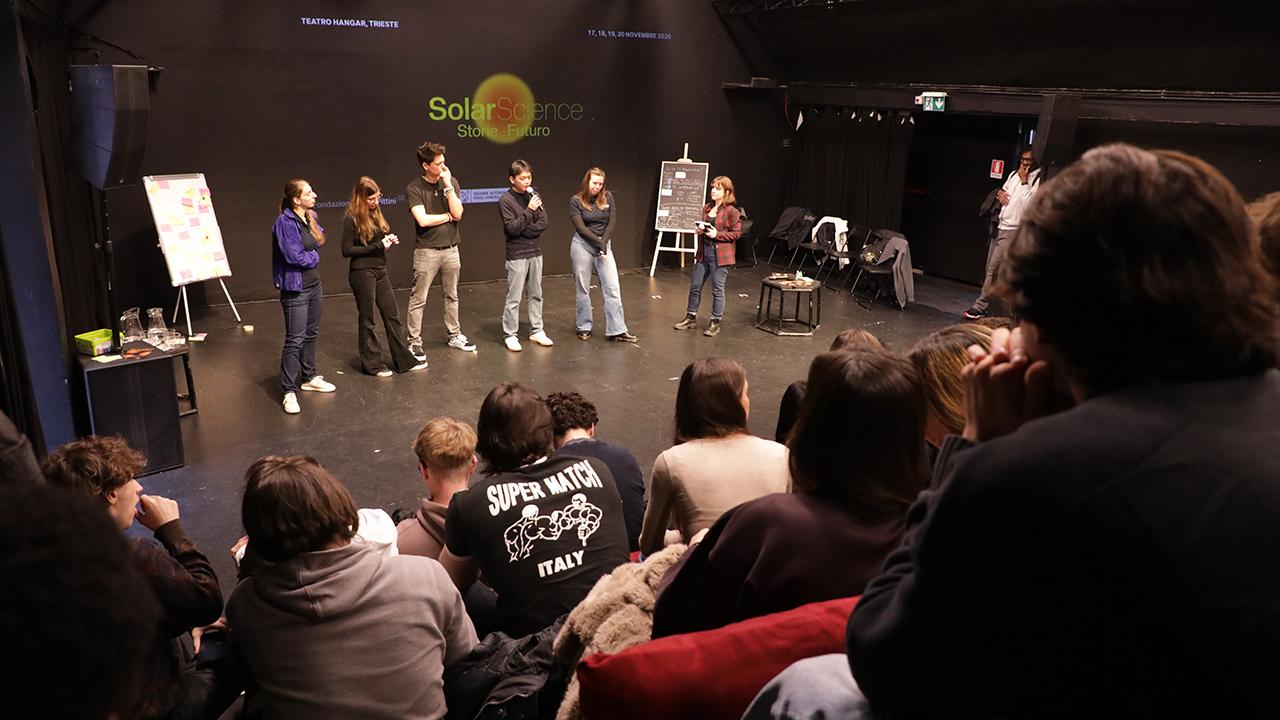
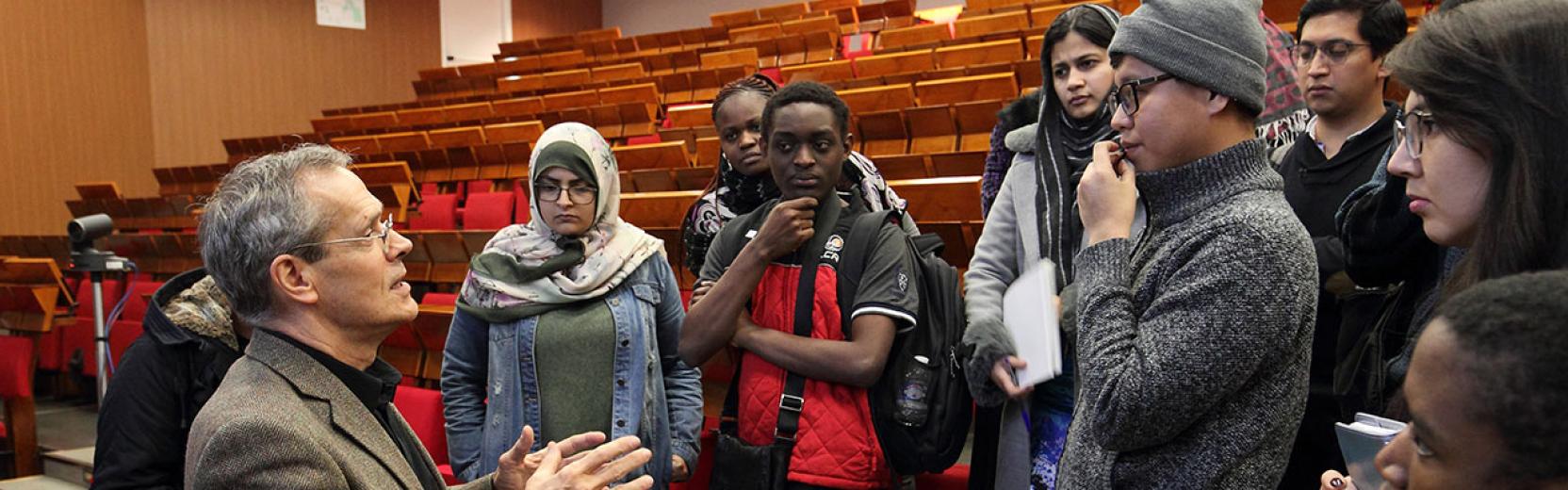
Final-year high-school students from Trieste met researchers of various local science institutes in a series of four events taking place at the Hangar Theatre in Trieste from 17 to 20 November. The initiative, called “Solar Science”, aims to inspire students who are about to choose their future path and take them behind the scenes of scientific research, through the stories of young researchers. Eight young scientists from Trieste-area research institutes presented aspects of their work and talked about their personal journey in science.
“Researchers do work that is much more creative and adventurous than one might expect, whether in the field or within those magical spaces known as laboratories. They are like modern-day explorers; they enjoy working independently but are connected to one another on a global scale. They are bearers of possibility,” said Nicole Leghissa, who had the original idea for the project and is the founder of the association “IFE - Connected by stories”, which promotes Solar Science.
The theme of this year’s edition is water, particularly in its connection with the sea. The presentations covered topics ranging from paleoclimate research in Antarctica to DNA analysis of marine organisms, and nature-based scientific solutions for a sustainable future. In this first edition of Solar Science, ICTP was represented by Deborah Osei-Tutu, a PhD student from Ghana; and Zihan Song, a postdoctoral researcher in ICTP’s Earth System Physics from China.
In his presentations on 17 and 19 November, Song told the students about how oceanic currents play an important role in the global climate and how he uses climate models to study the evolution of AMOC, the Atlantic Meridional Overturning Circulation, which is largely responsible for Europe’s mild climate. He also shared his personal motivations for studying climate science and deciding to come to Trieste to do a postdoc after his PhD in China. Reflecting on his first day at Solar Science, he commented: “I really enjoyed the event. The students were so engaged and interacted with all of us. It feels great to see that young people really care about our research. I was also surprised by their thoughtful questions, especially about the use of AI and its benefits and threats for research. It was wonderful to hear teenagers' thoughts and to help bridge the gap between scientists and young people.”
Osei-Tutu spoke on 18 and 20 November, talking about her interest in exploring how, perhaps surprisingly, water plays an important role in the physical processes that govern earthquakes, which are at the core of her research and in understanding the dynamic structure of our planet. She also told the story of how she first arrived in Trieste as a student in ICTP’s Postgraduate Diploma Programme before joining the University of Trieste as a PhD student, working in collaboration with researchers at ICTP. “Participating in the Solar Science outreach programme was a rewarding experience and a great reminder of the importance of inspiring young minds to pursue science and contribute meaningfully to society,” she commented. “At a time when fame, wealth, and luxury often dominate young people's aspirations, initiatives like this are essential for challenging misconceptions about scientists and presenting them as inspiring role models. I believe we need more such engagements, both in person and through the media, to make science and scientists more visible and relatable, particularly to young students in middle- and high-school,” she concluded.
In addition to the presentations and interactions between researchers and students taking place at Hangar Theatre, Solar Science also includes the production of audiovisual materials—videos, audio interviews, podcasts, and photos—which will be made available online to teachers and students in the Trieste region in support of science education.
ICTP partnered with Solar Science alongside UNESCO’s Organisation for Women in Science for the Developing World (OWSD), the University of Trieste, the Italian National Institute of Oceanography and Applied Geophysics – OGS, Area Marina Protetta di Miramare, Trieste’s “Guglielmo Oberdan” Scientific High School, and the Hangar Theatre. The project has been supported by the Friuli Venezia Giulia Autonomous Region, Fondazione Pittini and Le Fondazioni Casali.